Weather guide
What "feels like" temperature actually measures
Feels-like is a measure of you, not the air. Your body sheds heat constantly; wind carries that heat away faster, and humidity stops sweat evaporating. That is why the same reading can feel completely different on two days.
Updated August 11, 2026
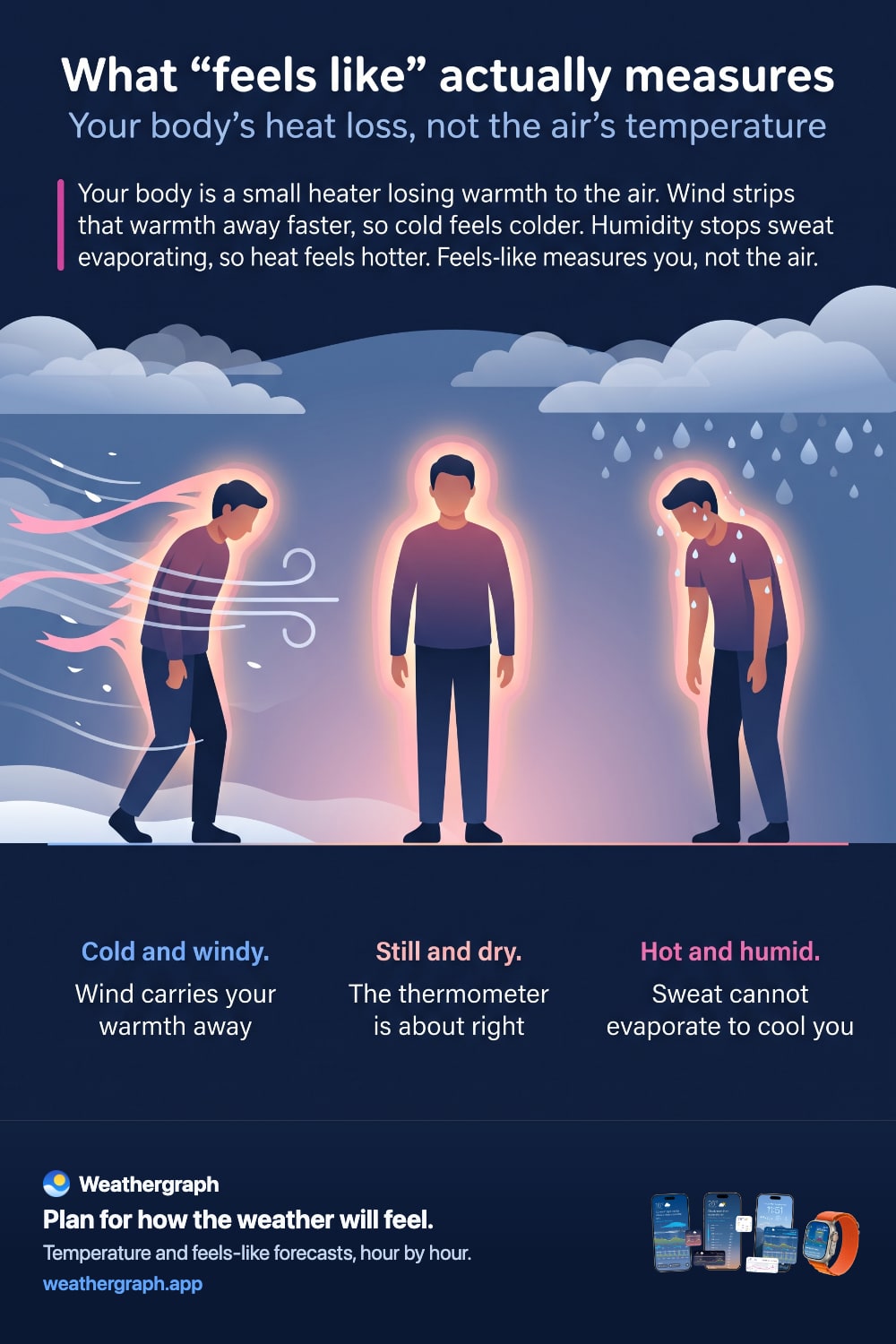
Two days can show the same number on the thermometer and feel nothing alike. One is pleasant; the other has you shivering or sticky. The "feels like" number exists to describe that difference—and it is more useful once you understand that it is really describing your body, not the air.
The short answer
- Your body is a heater. It produces heat constantly and must shed it to stay at a steady temperature.
- Air temperature is only one thing affecting how fast you shed it. Wind and humidity change the rate substantially.
- Wind carries warmth away faster. In the cold, that makes the air feel colder than it measures—wind chill.
- Humidity stops sweat evaporating. In the heat, that makes the air feel hotter than it measures—heat index.
- Feels-like is one number combining the air with those effects. It is an estimate of the thermal experience, not a second measurement of the air.
Why wind makes cold feel colder
A thin layer of air warmed by your skin sits against your body and insulates you. Wind strips that layer away and replaces it with cold air, which you then have to warm again—continuously.
The US National Weather Service puts it directly: as the wind increases, it "draws heat from the body, driving down skin temperature and eventually the internal body temperature," so the wind makes it feel much colder. See the NWS wind chill explanation.
Two consequences follow, and both are practical:
- Wind chill is about exposed skin. It describes heat loss from your face and hands, which is why windproof layers change the experience so dramatically.
- Wind chill does not cool objects below air temperature. A parked car, a water pipe, or a plant will not drop below the actual air temperature because of wind. Wind makes them reach that temperature faster, which is a different thing.
Why humidity makes heat feel hotter
In the heat your main cooling mechanism is sweat, and sweat only cools you when it evaporates. Evaporation carries energy away from your skin; sweat that merely sits there does very little.
Whether it can evaporate depends on how much moisture the air is already carrying. As the NWS explains, when the atmospheric moisture content is high, "the rate of evaporation from the body decreases"—so your cooling system works less well and the same air temperature becomes harder to bear. See the NWS heat index explanation.
This is also why dew point is such a useful summer number: it tells you directly how much moisture the air holds, and therefore how much room your sweat has to evaporate into.
One idea, two directions
Wind chill and heat index look like separate concepts with separate tables. They are two ends of the same idea: your body's heat balance.
| Conditions | What happens to your heat | Which way feels-like moves |
|---|---|---|
| Cold and windy | Warmth is stripped away faster than you produce it | Below the measured temperature |
| Still and dry | Heat loss roughly matches what you expect | Close to the measured temperature |
| Hot and humid | Sweat cannot evaporate, so cooling stalls | Above the measured temperature |
What feels-like cannot tell you
Feels-like formulas assume a typical person, and the assumptions matter:
- Standard assumptions. Wind chill formulas assume an adult walking at a certain pace, with a bare face, in shade. Heat index assumes shade and a light wind. Direct sunshine can add a substantial amount to how hot it feels.
- People differ. Fitness, acclimatisation, age, medication, clothing and how long you have been outside all change your experience. Someone who has spent a month in a humid climate handles it differently from a visitor arriving from a dry one.
- It is not a safety threshold. Feels-like is a comfort estimate, not a clearance to exercise or a warning that replaces official guidance. For heat and cold risk, follow the warnings issued by your local weather service.
How to use it in planning
The most useful habit is to look at feels-like and the reason behind it, rather than the single number alone.
- If feels-like is well below the temperature, the wind is doing it—so a windproof outer layer or a sheltered route changes the day more than an extra jumper would.
- If feels-like is well above the temperature, humidity is doing it—so shade and airflow help, and the cooler hours are worth seeking out. On humid days, the most comfortable window is usually early morning.
- If feels-like tracks the temperature closely, the air is doing what you would expect and you can dress by the thermometer.
What this looks like in Weathergraph
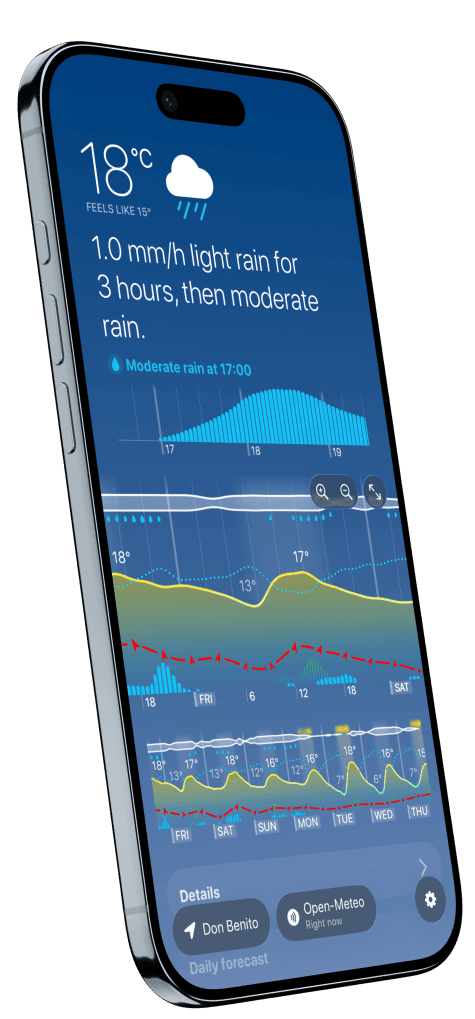
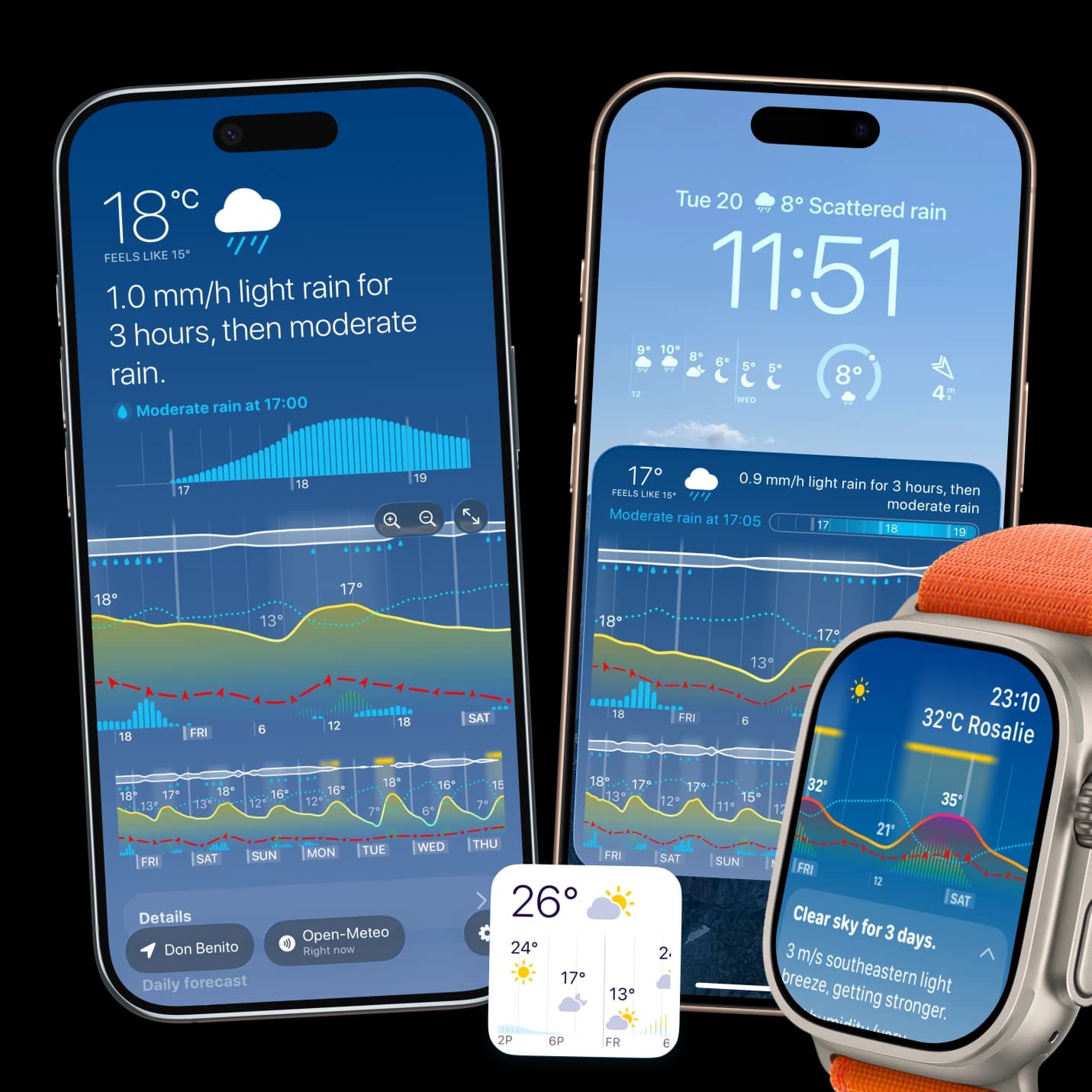
Weathergraph shows temperature and feels-like together on the hourly graph, alongside wind and dew point. When the two temperature lines separate, the wind and dew-point rows tell you which effect is responsible—so instead of a mysterious second number, you get the reason, hour by hour.
Sources and limits
- NWS wind chill describes how wind increases heat loss from exposed skin.
- NWS heat index explains how high atmospheric moisture reduces evaporation from the body.
- Feels-like values are modelled estimates for a typical person in shade. They are not medical guidance. For heat or cold risk, follow current warnings from your local weather service.
Weathergraph
See the real temperature and how it will feel
Weathergraph puts temperature, feels-like, wind and dew point on one hourly timeline—so you can see not just how warm it will be, but why it will feel that way.
