Weather guide
How to find a clear-sky window for stargazing
A cloudy evening can change. Follow the cloud forecast through the hours you can observe, then consider darkness, the Moon and nearby lights.
Updated September 8, 2026
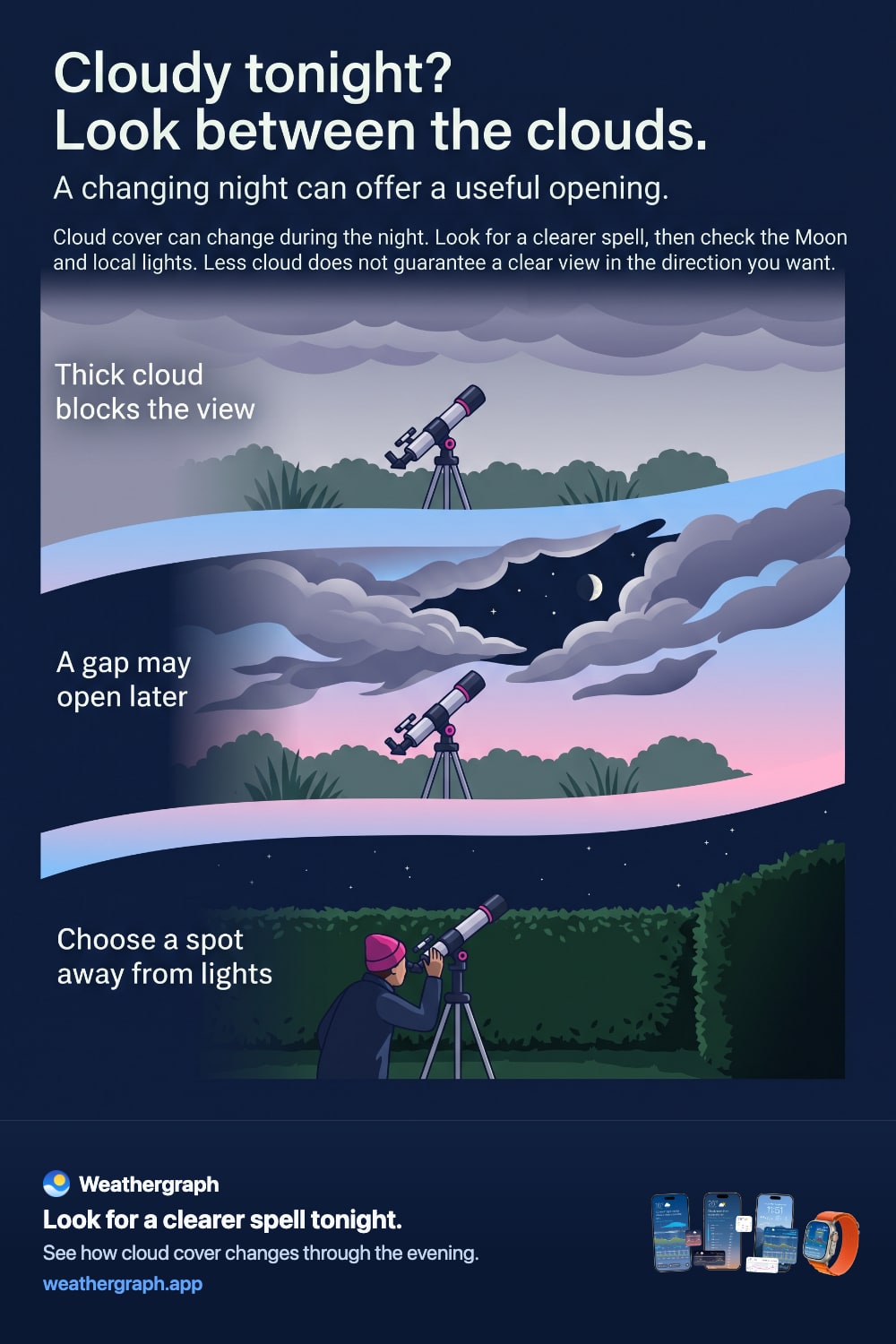
Read cloud cover across the hours when you could actually observe, rather than deciding from a single daily icon. A night that starts cloudy may have an opening later. Once you find a possible clearing, check darkness, Moon brightness and local lights too.
The useful question is not simply “Is tonight clear?” It is “Might there be a clear interval long enough for what I want to see?”
The quick answer
- Read cloud cover across your whole observing window, not at one moment. Most "cloudy" evenings have a gap somewhere in them.
- A clearing trend after sunset is common — daytime convective cloud often collapses as the heating stops.
- Check the Moon before the cloud. A clear sky under a bright Moon is worse for deep-sky work than broken cloud under a new one.
- Clear and calm is also the fog recipe. The same conditions that give a transparent sky can fill a valley by the small hours.
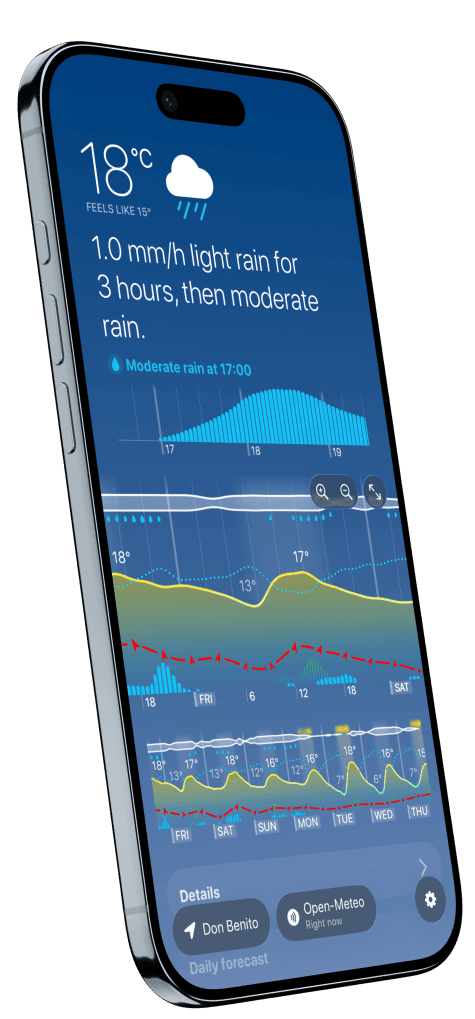
- In Weathergraph the cloud strip runs along the top of the hourly timeline and scrolls through the night alongside temperature, dew point and wind — so a two-hour gap at 01:00 is visible without opening anything else. The dew point line is the one that warns about fog.
A clearing is a window, not an appointment
Imagine a forecast that shows extensive cloud early in the evening, less cloud later, then increasing cover after midnight. The middle interval is worth investigating. It is not a promise that the sky will open at one exact minute.
Allow time to get outside, set up and look around. If the only apparent gap is very narrow, a small forecast timing change may erase it. A broader improving period gives you more flexibility.
This is an illustrative reading method, not tonight's forecast. Weathergraph's cloud layer and shared time axis help you follow the change; use the hourly graph guide if the chart is new to you.
What cloud cover tells you
Cloud cover describes the expected coverage of the sky. It does not identify the exact patch above a particular constellation. It also does not rate atmospheric steadiness or every aspect of transparency.
A lower cloud percentage is therefore a useful lead, not a complete observing-quality score. Thin cloud, haze or local fog can still affect the view. Consult the forecast's available detail and look at the actual sky before setting up. NWS forecast-element definitions.
Add darkness to the plan
For faint stars and meteors, a dark sky matters. Bright moonlight and artificial light can hide faint objects even when clouds are absent. NASA recommends considering distance from bright city lights and the Moon when choosing where to stargaze. NASA's guide to stargazing locations.
Your target changes what counts as a useful night. Looking at the Moon itself is different from searching for a faint object. A clear interval is only useful if the thing you want to see is above your horizon then; check a sky chart or observing reference for that part of the plan.
A three-part evening check
| Check | What to do with it |
|---|---|
| Cloud trend during your available hours | Find a possible interval and leave room for timing uncertainty. |
| Darkness and your target | Check the Moon, nearby lights and whether the target is visible then. |
| Temperature and wind | Prepare for the conditions while standing still outside, not only the walk to your observing spot. |
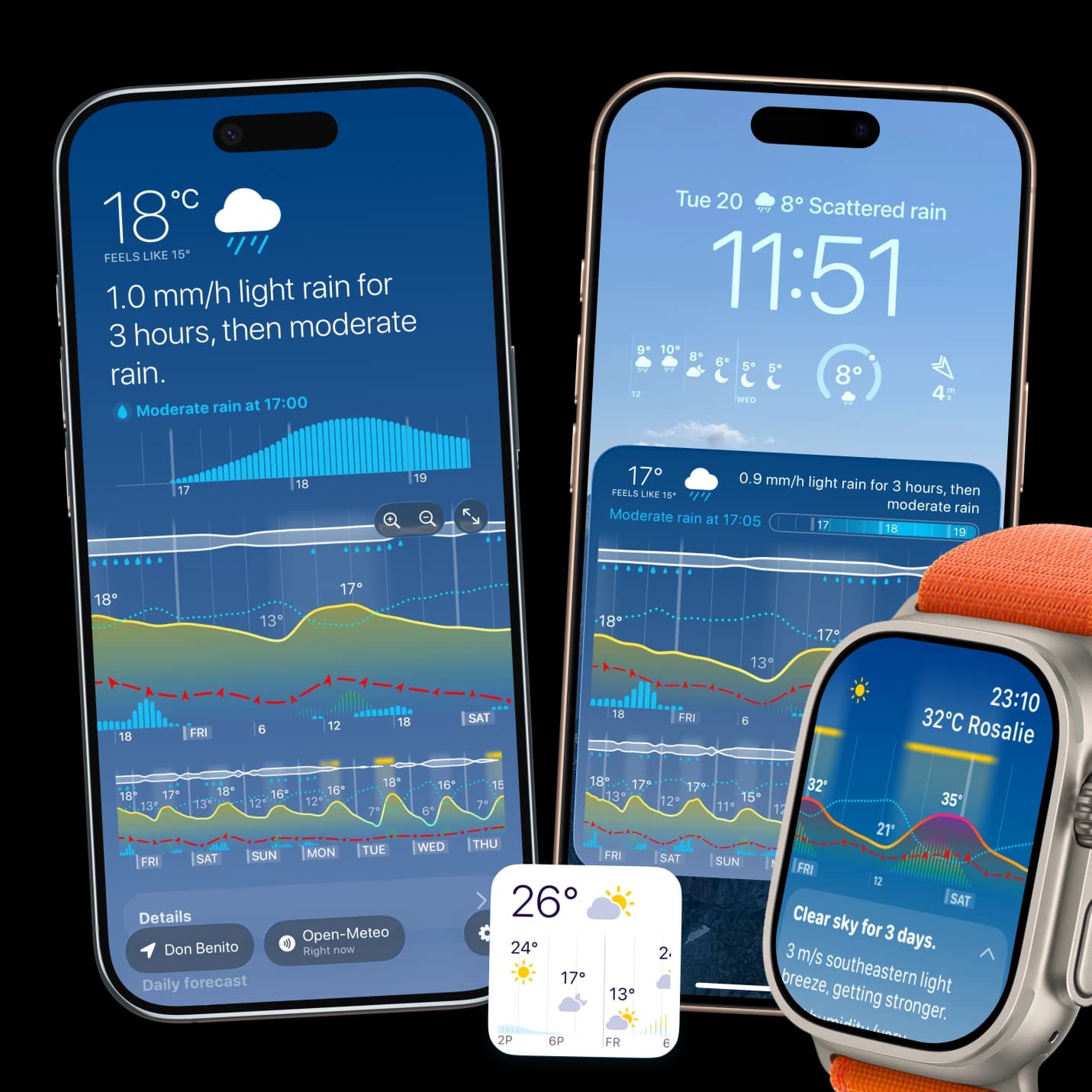
In Weathergraph, choose the observing location and look across the cloud layer for the evening and night. Use the temperature and wind forecasts for context. The app's weather timeline is one part of this check; astronomical target positions and local light conditions are separate inputs.
Why a clear start can still change
Clouds are not the only way visibility can worsen. On some clear, calm nights, the ground cools and nearby moist air can form fog. The relationship between temperature and dew point can help explain that process, but it does not establish exactly where fog will form. Read why clear nights can end in fog.
Check the latest forecast before leaving, and use the actual sky as the final reality check. A short session from home can be worthwhile even when conditions do not justify a longer trip.
Weathergraph
Follow the cloud changes through the night
Weathergraph shows the upcoming cloud forecast on an hourly timeline alongside temperature and wind, so you can compare the evening's possible observing windows.
