Weather guide
How to read wind direction at your campsite
Translate a compass direction into the side of your camper the wind meets, then read speed, gusts and changes across the hours you will be there.
Updated September 8, 2026
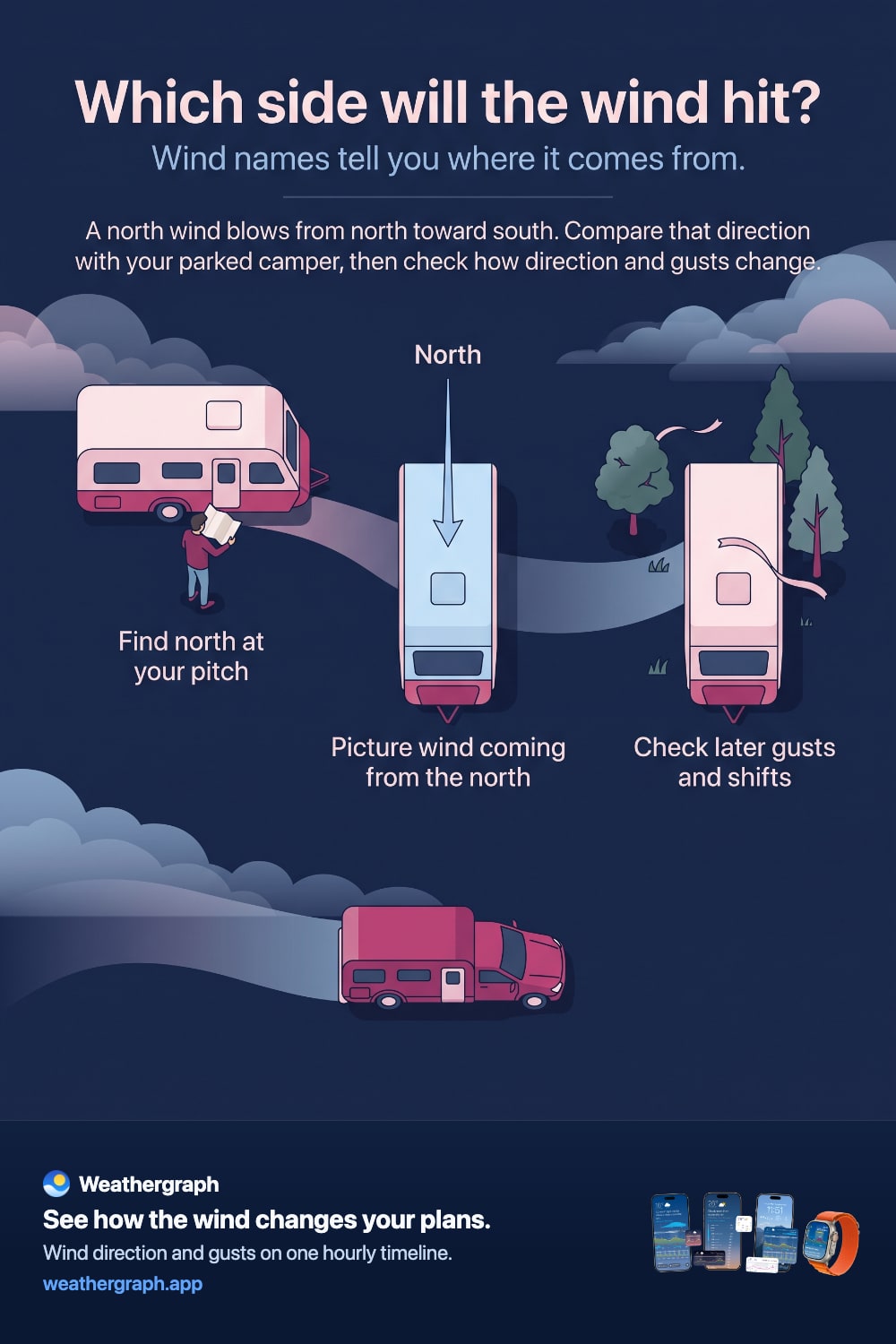
Weather forecasts name wind for the direction it comes from. A north wind travels from north toward south. To work out which side of your camper it meets, first orient the vehicle on a map or compass, then picture that incoming direction.
The same forecast can feel very different after you turn a vehicle or move a seating area. A compass label becomes useful when you relate it to the place around you.
Start with where the wind comes from
The National Weather Service wind glossary defines wind direction as its direction of origin. That gives you a reliable starting point:
| Forecast direction | Air travels from… | Toward… |
|---|---|---|
| North | North | South |
| East | East | West |
| South | South | North |
| West | West | East |
An arrow in an app may depict airflow or point toward the named origin, depending on its convention. Confirm the legend instead of guessing from the arrowhead alone. Weathergraph's graph legend is the place to start for its symbols.
Put your camper in the picture
Imagine a camper whose front faces north. A north wind approaches its front. An east wind approaches its east-facing side. Rotate the camper and those relationships change, even though the forecast's compass directions do not.
Try the comparison with a quick sketch:
- Mark north on a piece of paper or use a correctly oriented map.
- Draw the camper's actual position and the place where you plan to sit.
- Trace the incoming wind from the named direction toward the camper.
- Repeat for the later hours if the forecast direction changes.
This is a manual orientation method. It does not require an automatic rotating compass display or a campsite map inside the weather app.
Read gusts as well as direction
Direction tells you which side the wind approaches. Sustained speed and gusts describe different parts of its strength. A steady breeze and brief stronger bursts can share the same direction.
Look across your whole stay, including the evening or night if equipment will remain outside. The wind and gusts guide explains how to compare the average and the peaks without treating either as a guarantee.
The forecast is not the pitch itself
Trees, buildings, terrain and gaps can alter the wind at a particular spot. A regional forecast cannot describe every sheltered corner or turbulent gap beside a vehicle. Compare the forecast with what you observe on arrival and keep checking as conditions change.
For awnings, follow the equipment manufacturer's operating limits and instructions. Wind from a particular side is not automatically safe, and there is no universal forecast speed at which every awning can remain open. Gusts and changing direction matter as well as average speed.
Use the hourly view for the change that matters
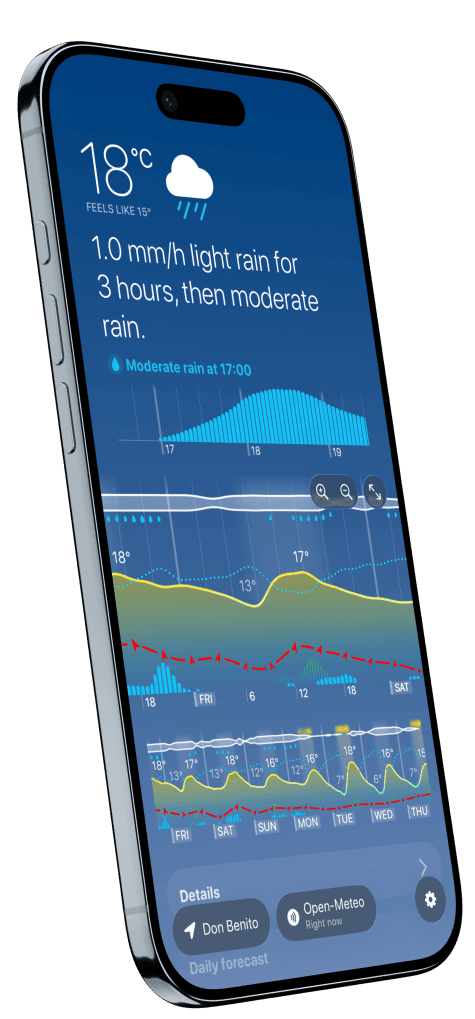
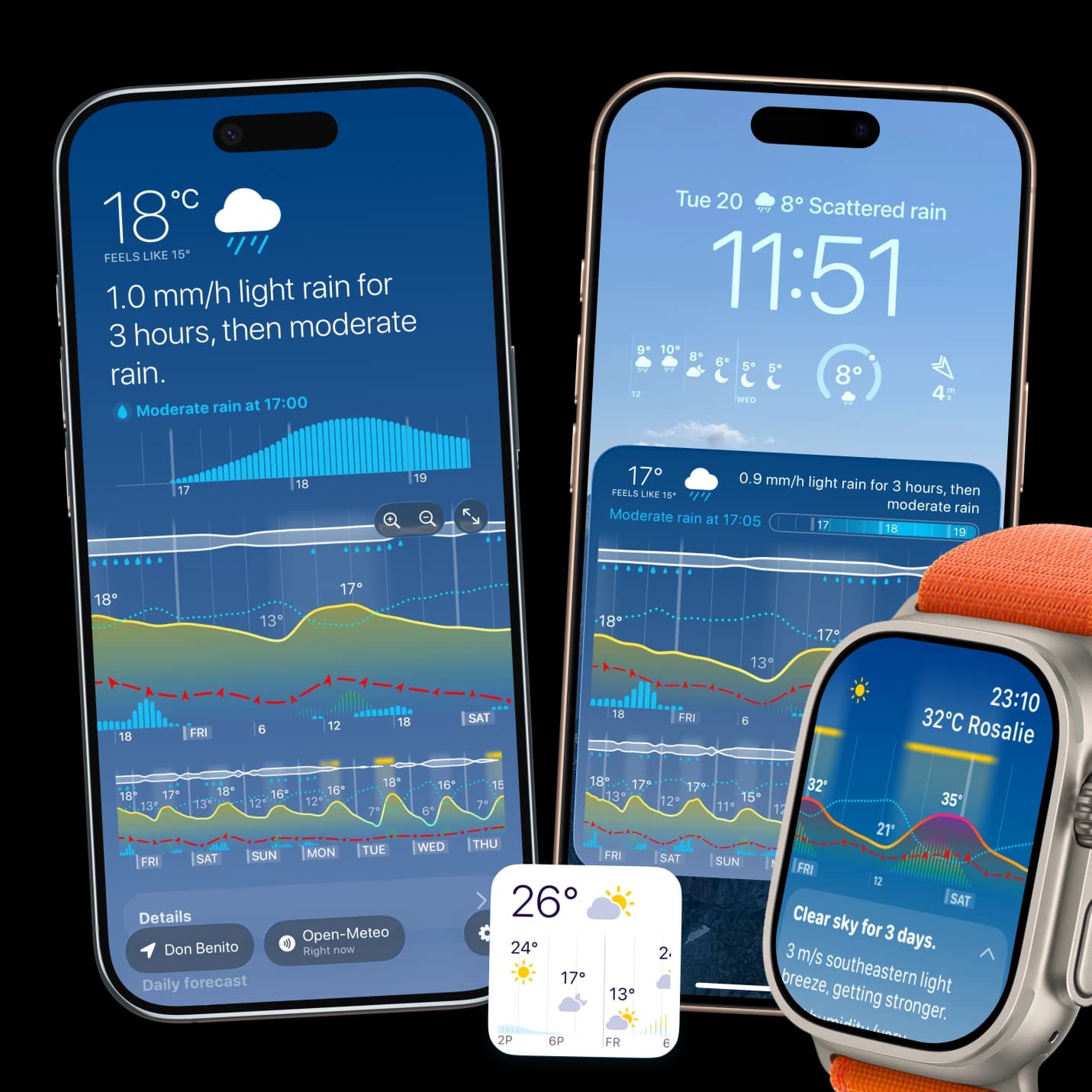
In Weathergraph, select the campsite area and follow the upcoming wind direction and gusts across the relevant hours. Keep your physical orientation sketch beside that forecast. If you are still at home, check the destination rather than reading the weather where your phone happens to be.
The goal is a concrete understanding: where the air is coming from now in the forecast, how that relates to your pitch, and what is expected to change later.
Weathergraph
See how the wind changes while you are parked
Weathergraph puts wind direction, speed and gusts on an hourly timeline. Relate those upcoming changes to your campsite before settling into your plans.
