Weather guide
Forecasting the light: golden hour, cloud and clear breaks
Good light is a cloud forecast, not a sunset time. Learn which cloud conditions make a sunset and how to find the clear break in the hours before it.
Every app knows what time the sun sets. That is astronomy, and it is not the hard part. What decides whether a sunset is worth driving for is the cloud in the hours around it — and specifically whether there is a clear gap near the horizon for light to come through underneath the cloud.
The quick answer
- A clear sky can give a clean colour gradient. Clouds add surfaces for coloured light to reach; they are not required for sunset colour.
- Thick overcast can block the light. A gap near the horizon may change the result, even when cloud cover overhead is high.
- Broken or scattered high cloud with a clear gap low in the west is the good case — the sun drops below the cloud deck and lights it from beneath.
- Read the hours before, not the minute of. Changes in cloud timing can change the light. Treat the forecast as a reason to look again, not a promise.
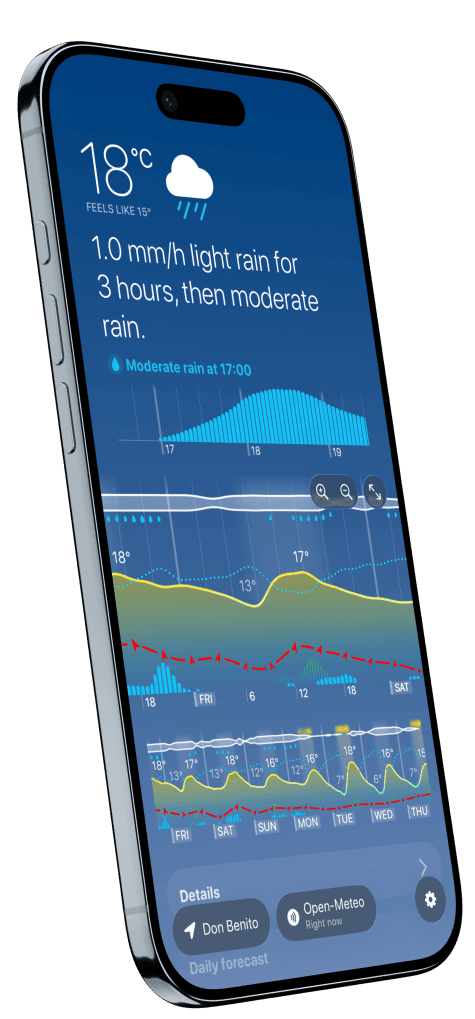
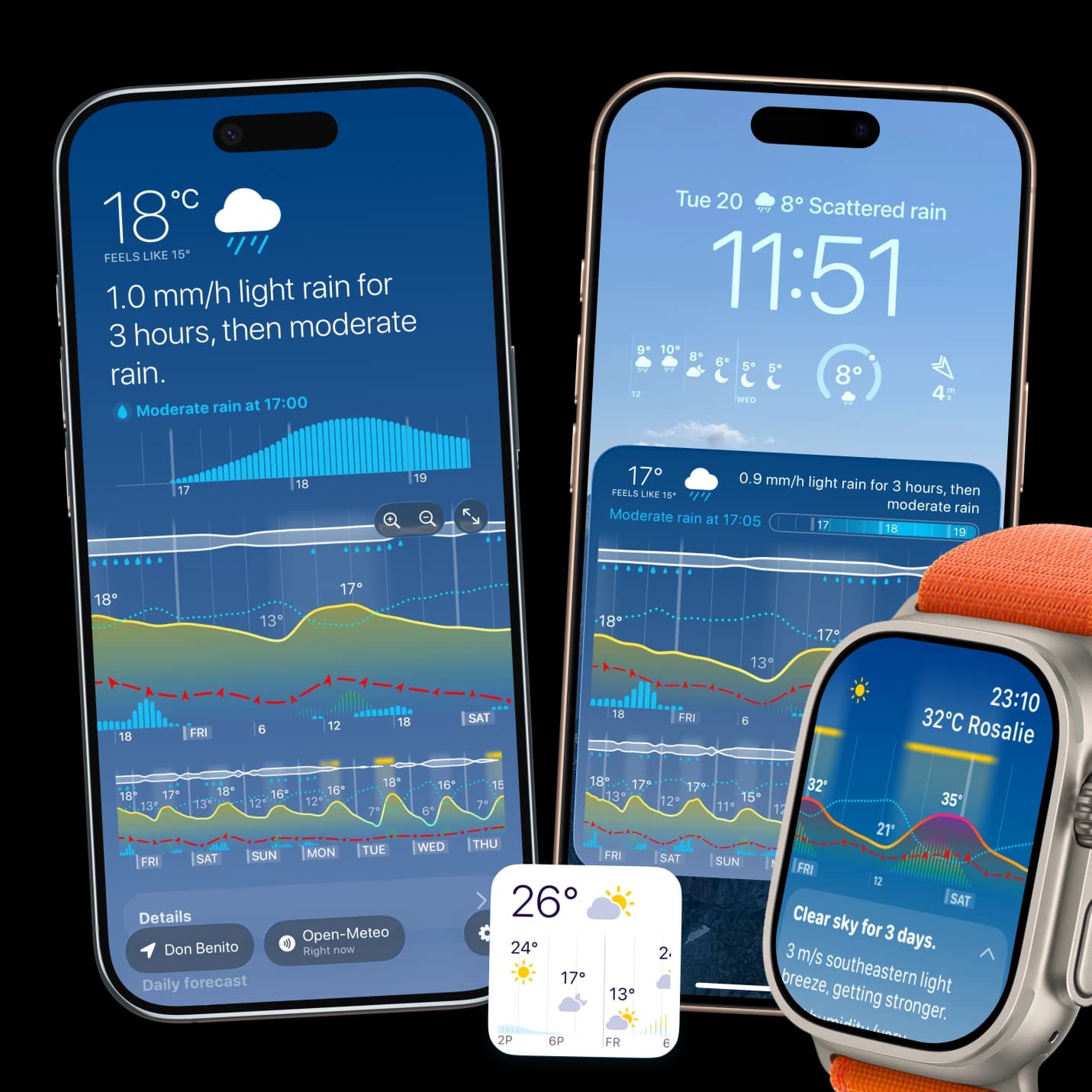
- In Weathergraph the cloud strip runs along the top of the hourly chart with a glow over daylight hours that are clear or mostly clear, so the shape of the afternoon's cloud — and any break in it — reads at a glance. Sunrise and sunset sit in the details card below.
What kind of cloud makes the light
| Cloud in the hour before sunset | Likely result |
|---|---|
| Clear sky | A clean colour gradient or silhouettes may work without illuminated clouds. |
| High, thin cloud | It may catch warm light while lower layers are in shadow. |
| Broken mid-level with a clear western horizon | Strong, brief colour as the sun slips under the deck. |
| Thick overcast to the horizon | Direct warm light may be blocked; check for openings. |
| Thick low cloud clearing late | A gap may change the scene; its timing is uncertain. |
For illuminated clouds, the light needs a path to the cloud you want to photograph. Near sunset, sunlight takes a longer path through the atmosphere, changing the colour that reaches those clouds. NOAA explains cloud colour and scattering. Total cloud percentage alone cannot tell you cloud height or whether the western horizon is open.
Golden hour is a window, not a moment
The length of twilight changes with latitude and season. Arrive early enough to watch the light develop and leave room to stay after sunset. There is no fixed twenty-minute window that works everywhere.
The same is true in reverse at dawn, with one addition: clear, calm nights frequently end in valley fog, which is either the shot of the morning or the thing that hides it entirely. The mechanism is in our guide on why clear nights end in fog.
Reading the afternoon to predict the evening
- Look at the cloud strip across the whole afternoon, not just at sunset. A clearing trend is more promising than a snapshot.
- Check whether precipitation ends before sunset. A clearing shower often leaves exactly the broken cloud that makes the light.
- Check wind. Wind can move cloud and make a long exposure harder. Watch the scene as well as the timeline.
- Have a second location. The cheapest insurance against a forecast that shifts by an hour.
For night work
If the plan is astro rather than golden hour, the question changes from "is there interesting cloud" to "is there any cloud at all", and moonrise matters as much as clear sky. Our guide on finding a clear-sky window for stargazing covers that case.
Sources and what changed
- NOAA: the colour of clouds explains how sunlight and scattering affect cloud colour.
- Checked 20 October 2026: removed unsupported cloud-percentage thresholds and a fixed golden-hour duration. The table suggests scenes to look for; it does not predict a photograph from cloud percentage alone.
Weathergraph
See the light before you drive out
Weathergraph shows a cloud strip across the hourly timeline with a glow over clear daylight hours, plus sunrise and sunset—so a clear break before golden hour is visible at a glance.
