Weather guide
Weather and migraine: track pressure alongside a headache diary
Keep a weather forecast and your symptom record separate, include headache-free days, and use the notes to discuss possible patterns with your clinician.
Updated September 8, 2026
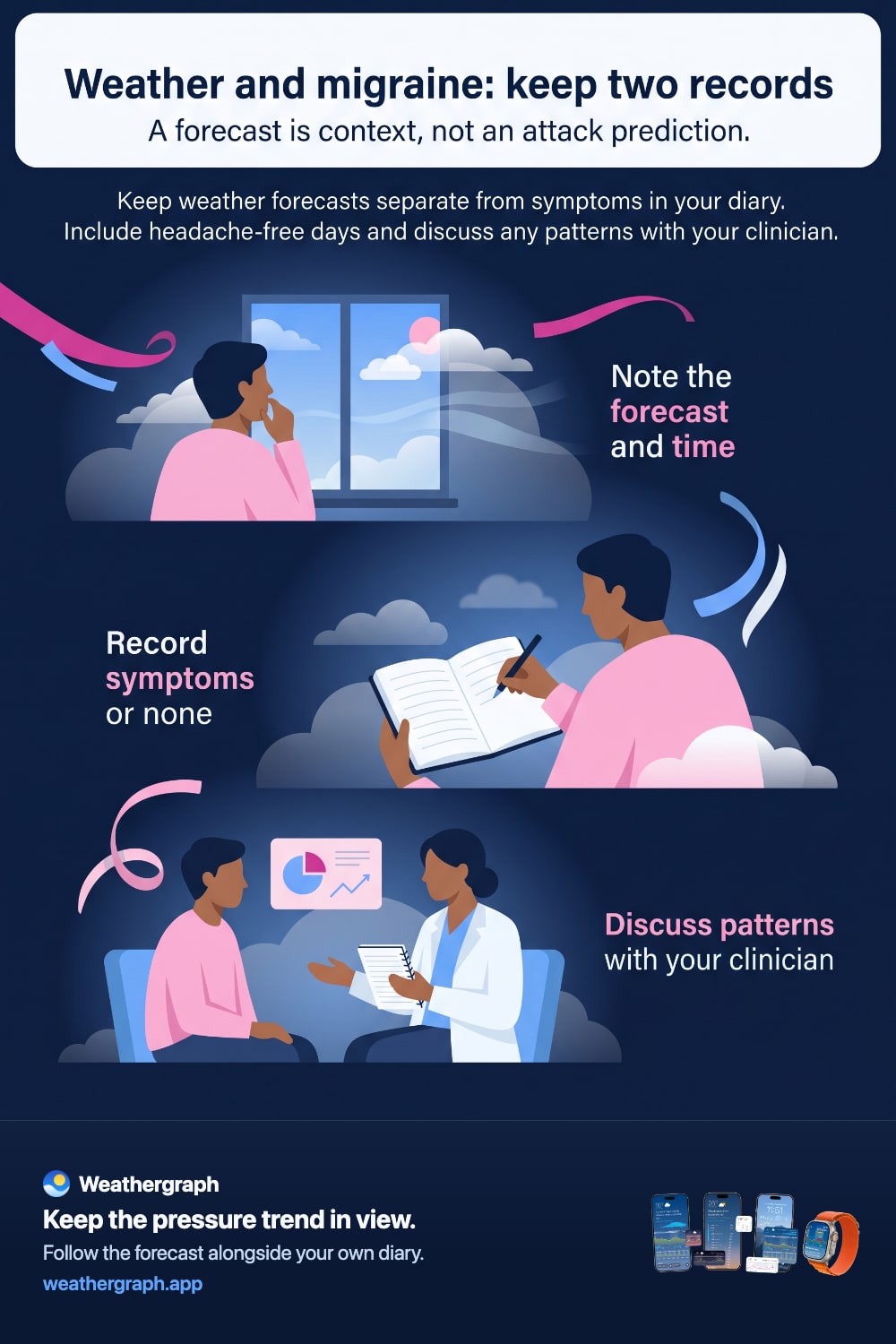
A pressure forecast can be one piece of context in a headache diary. It cannot tell you whether a migraine attack will happen. Record what the forecast said separately from what you experienced, and include days without symptoms as well as days with them.
Mayo Clinic explains that weather sensitivity varies between people and suggests keeping a headache diary to explore possible weather-related triggers. That supports looking for personal patterns, not choosing a universal pressure threshold. Mayo Clinic on weather and migraine.
The quick answer
- Track the pressure trend, not today's number. Rate and direction of change are what people report noticing; an absolute reading in hPa on its own says very little.
- Record headache-free days too. A diary that only contains bad days cannot show a pattern, only a list.
- Keep the weather record and the symptom record separate, and let a clinician look at both. This is context to discuss, not a prediction to act on.
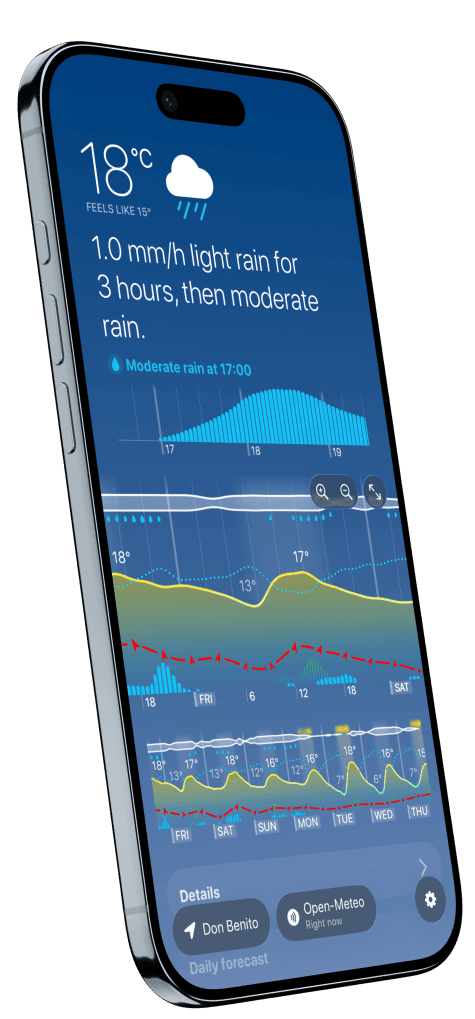
- In Weathergraph atmospheric pressure is one of the metrics you can put on the hourly graph, so the coming rise or fall is a shape over time rather than a single figure — which is the form the diary actually needs.
No consumer weather app can tell you whether you will get a headache, and this guide does not try to. It describes how to keep a record worth discussing.
Keep the forecast and the experience separate
There are two records in this method:
- Weather context: the place, time you checked, forecast source and pressure trend expected over a stated interval.
- Your experience: symptoms or none, their timing, and other context you normally record in your diary.
Label the weather entry as a forecast. A curve saved in the morning describes what was predicted then; it is not proof of the pressure that was later observed. Forecast revisions are another reason to keep the time of the check.
Weathergraph looks forward from now. If you want a continuing record, make your own dated note or screenshot when you check. Do not expect to scroll back later for yesterday's weather.
A simple diary worksheet
Use a notebook or your existing diary. These fields are a starting point, not a clinical assessment form:
| Field | What to record |
|---|---|
| Date and place | Enough context to match the weather entry to your day. |
| Forecast checked at | Time, source and units, plus the future interval you looked at. |
| Pressure context | The expected trend, or a dated screenshot clearly labeled “forecast.” |
| Symptoms | What you experienced and when, including “none” when appropriate. |
| Other daily context | The sleep, food, stress or other details already relevant to your diary. |
| Question for your clinician | What you noticed and want help interpreting. |
The American Migraine Foundation recommends consistent diary entries that include both the presence and absence of symptoms, weather and other daily context. Such records can help a clinician understand an individual's experience. AMF headache-hygiene guidance.
Headache-free days belong in the record
If you write only after an uncomfortable day, the notebook will naturally fill with uncomfortable days. Recording “no symptoms” also preserves the occasions when a weather change was forecast and no headache followed.
Use the same basic recording habit across different kinds of days. Keep it manageable enough to continue. The aim is a useful conversation about your experience, rather than a growing collection of weather screenshots without symptom context.
What a pressure pattern does not establish
A similar weather pattern and headache can occur together without proving that one caused the other. Weather variables change together, and other parts of daily life can change too. A forecast trend by itself does not validate a diagnosis, an attack countdown, a medication decision or a particular lead time.
Do not choose a treatment or change prescribed medication from the weather graph. Follow the plan agreed with your clinician and bring your notes to that conversation.
Use Weathergraph for the weather half
Look at the upcoming pressure trend for your location and the hours you are recording. Keep the source, units and checking time with the note. Leave the symptom entry in your own diary, where it can remain separate from the forecast.
For help reading time and change on the chart, see the hourly weather graph guide. If changing forecasts make your notes confusing, the forecast-source guide explains why predictions can be revised.
This is a method for keeping weather context beside a personal record. Weathergraph is a weather app, not a migraine prediction or treatment service.
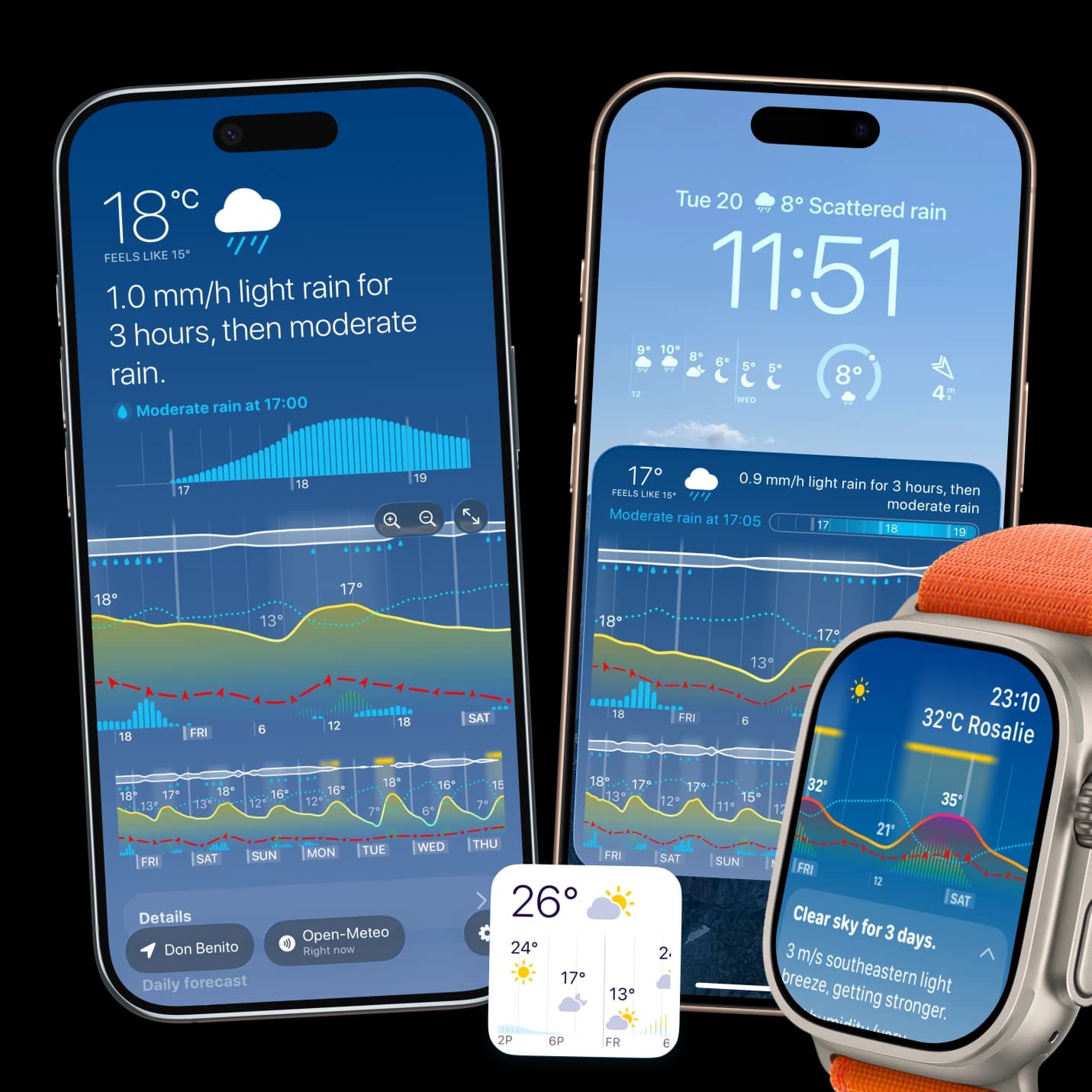
Weathergraph
Keep the weather context easy to see
Weathergraph shows the upcoming pressure trend on an hourly graph. Use it as weather context alongside a separate diary of your own experience.
